

Mathew M. Yazar Published His First Book!

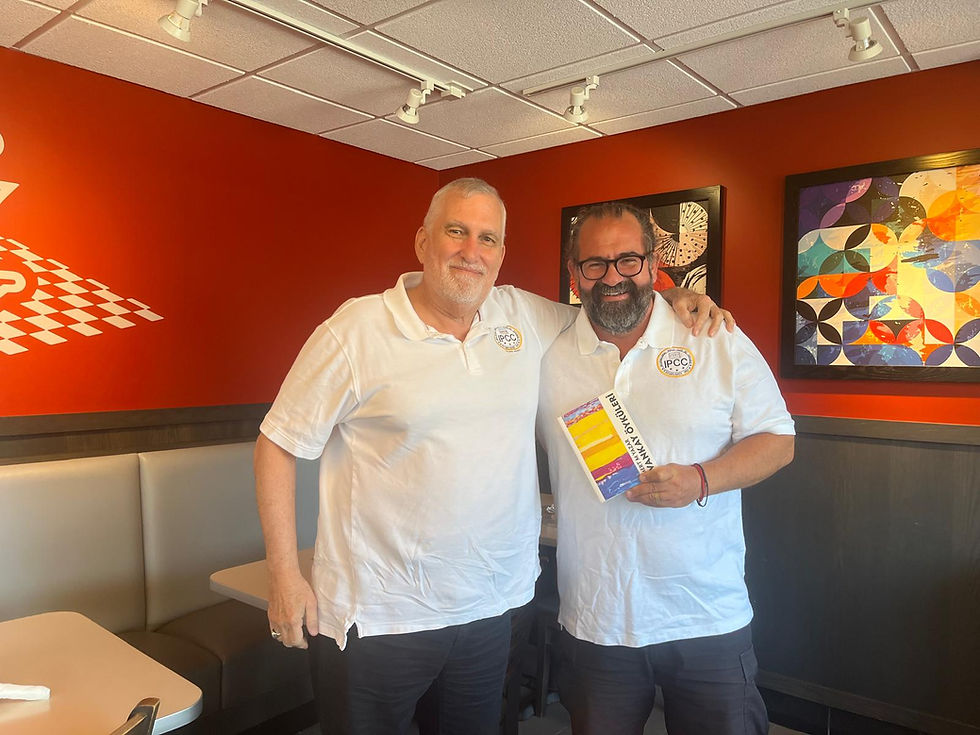
We are so proud to share the announcement that long time IPCC member, Mathew M. Yazar has published his first book.
In January 2025 in Istanbul, Turkey, Mathew published "Vankay Stories" (Victory Stories). The English version was published on July 15, 2025.
Mathew was kind enough to share the full interview with his alma mater, Yeditepe University with us.
Please join us in wishing Mathew much success and enjoy the interview below:
1. Could you tell us about your experience at Yeditepe University?
Yeditepe University has always been a warm home for me—intellectually and
emotionally grounding, no matter where I go in the world. I take pride in being
among its first graduates.
During my years there, I had the opportunity to study
across the Istanbul campuses of Acıbadem, Üsküdar, Nakkaştepe, and
Kayışdağı. As a Yeditepe alumnus, I felt honored to learn from a remarkable
roster of professors, including Tuğrul Tanyol, Cevat Çapan, Bedri
Selimhocaoğlu, Mario Levi, Ülkü Dicle, Atilla Dicle, and many others whose
names I dearly remember. Being part of a university that continues Atatürk’s
renaissance is a great honor.
2. What advantages did being a Yeditepe alumnus bring to your career?
Beyond excellent education, studying at Yeditepe’s beautiful campus and being
surrounded by a vibrant social environment awakened my entrepreneurial spirit.
Where else can a student freely approach the Chairman of the Board, the Rector,
or the Dean of Students? I consider myself extremely fortunate that Chairman
Bedrettin Dalan, Rector Prof. Ahmet Serpil, Dean of Students Sedefhan Oğuz,
and my professors were always available with attention, kindness, and guidance.
I also served as the founding president of Yeditepe’s Dance Club. I still recall
the excitement I felt that day—organizing events and leading a team.
Responsibility, leadership, free expression, and many personal growth
opportunities were all thanks to this experience. Even years after graduation,
every time I visited for career days or other events, I left with great affection.
3. What was a turning point in your career?
The most significant turning point in my career came after graduate school when
I suddenly decided to move to America. For the first time, I stepped beyond my
comfort zone into an entirely foreign culture. Moving to Chicago expanded my
horizons and gave me an unforgettable experience.
By nature, I act swiftly if the direction feels right. For example, I proposed
marriage within three days of meeting my wife—though she was living in
America—and we were married on the sixth day. Shortly after, I began my
internship and new life abroad. Every change I faced transformed me in
profound ways.
Teaching was another transformative journey. It taught me discipline, research skills, structured working, and time management. When motivation is aligned,
pursuing goals becomes easier and life more meaningful.
Later, I discovered creative drama—a brand-new discipline for me. My final
project, “Using Creative Drama Techniques to Improve English Speaking
Skills,” under the title “I Understand but Cannot Speak,” helped me explore
unexpected emotions and develop creative thinking within a safe environment. It
brought back my writing habit, enriched my perspective, and fostered
multidimensional thinking. Years later, I returned to writing through workshops
with my beloved professor Mario Levi at Yeditepe.

4. What advice do you have for students or recent graduates starting their
careers?
I consistently tell my students that taking risks is essential. Nothing changes
without action. Life is ever-moving; stillness opposes that natural flow. That
said, pausing—with purpose—is part of the rhythm, like a musical rest.
When things don’t go as planned or you don’t hear what you expect, don’t give
up. Try different disciplines—study math, biology, fine arts. Always have Plan
B or C. Circumstances change, and so must strategies.
Cultivate curiosity—read widely, stay informed, learn foreign languages, travel
often. Practice reasoning: break down problems, explore solutions, choose the
best path, and take action.
5. Can you describe the origin of Vankay Öyküleri?
“Vankay” is my boundless kingdom of imagination—a freedom to roam inside
the worlds of my characters. In this realm, fiction and reality blur.
I realized I could alleviate my existential doubts—concerning meaning, loneliness, freedom,
and death—most effectively through writing. Though I initially kept my work
private, I eventually decided to share it, believing my stories could resonate
beyond my life, across time, even centuries later.
If published, my hope was that readers—much like me, who journeyed through
the dream worlds of writers I love—would witness my adventure through these
stories.
6. What is the central theme of the stories in Vankay Öyküleri? What kind
of world do they create for readers?
The common thread is authenticity and freedom—written sincerely and without
constraint. Writers hold infinite magic. My aim was to tell emotionally honest
stories that remind us of our humanity. Readers have told me I’ve succeeded—
and that brings me great joy. I hope they wander through each story’s corridors
with an open, unbiased perspective.
7. Which event or inspiration most influenced you while writing the book?
While writing, I was also reading The Library of Possibilities, which very
powerfully explored the fine line between choice and chance. It showed how
small decisions shape life and invited reflection on fate versus free will—
highlighting how awareness can pivot reality.
It reminded me that while alternate lives may exist, I am happy with my own. I
chose to realize myself by setting aside “ifs” and “what-ifs,” and focusing on
what I wanted to write. Writing became a remedy to disappearance.
I live each story with my characters. I laugh, I hurt, I breathe through them.
Sometimes the words of those long gone come alive on paper again—a
magical blend of fact and fiction. To me, the marvel of literature lies in their
union.
8. What advice would you give to aspiring writers?
Writing is not a casual hobby—it demands commitment of time and effort. Start
by reading across genres, then build the habit of writing notes, diaries, or short
stories.
Be observant and a story-seeker. Begin by writing about what you know—start
simple and go deeper. Finding your voice takes time, patience, and discipline.
Share your work with trusted readers, not necessarily everyone, and be open to
constructive criticism—it fosters growth.
Join competitions and workshops—they expand your perspective. Most
importantly, believe in yourself and your work. Keep writing, and stay ready—
because inspiration can arrive unexpectedly and vanish just as quickly.
9. How do the themes in your book connect with contemporary society?
Vankay Öyküleri reflects our daily lives with fast-paced yet meaningful stories, ideal for today’s attention economy. They explore prejudice, uncertainty, self-
discovery, regret, playfulness, ego, indifference, longing, loneliness, transformation, and boundlessness—mirroring societal dynamics through personal tales.
Through minimal yet powerful storytelling, I aim to evoke deep emotional
resonance in readers, merging individual experiences with broader social
realities.
Read the interview on the university's website here.
English edition published on July 15th.
Book title: Vankay Stories
His second book is finished and currently in the editing phase. It will be published around the beginning of September.
Mathew divides his time between Istanbul, Bodrum, and Chicago throughout the year.
Link to Vankay Stories here.
You can connect with Mathew on Instagram here.

Bài viết này ngắn gọn mà dễ nắm, mình đọc liền một lượt là hiểu, cảm ơn bạn đã chia sẻ nhé. Mình cũng có thói quen xem thống kê XSMB mỗi ngày, nhưng hồi trước phải mở nhiều nơi rồi tự đối chiếu nên khá mất công. Về sau mình gom lại thông tin để theo dõi cho tiện, kiểu lưu một chỗ để khỏi quên và dễ so sánh theo từng ngày. Những lúc rảnh mình hay vào soicau247.com xem nhanh, rồi ghi lại vài ý quan trọng để tránh bỏ sót số liệu. Ai hay cập nhật thường xuyên chắc sẽ thấy cách này đỡ rối hơn nhiều. Mình để lại ở đây cho bạn nào cần…